
While dogs that wear muzzles often carry the stigma of being “bad” or “dangerous” and while that is really unfortunate, muzzles indeed are tools that can often not only keep people and other animals safe, but they can also – believe it or not, improve the life of the dog wearing it.
ANY dog – and I cannot emphasis this enough, can bite and will bite if he/she thinks that biting is the best option to defend itself. Or as the case might be, if in some way biting has been reinforced in the past most likely and under very similar circumstances the dog will bite again if not taught to do something different (a better “choice” -let’s call it). This “better behavior choice” must also address the motivation for the dog biting in the first place.
In other words, biting has proven to work for the dog in the past. Dogs use strategies that have “worked” for them and abandon those that don’t. Hey, let’s give them credit! How often can we say that about ourselves as we appear to stumble on the same mistakes over and over again.
The question as to when to muzzle a dog also should take into consideration legal implications. Of course, this might vary depending on the local dog laws, but what I can say confidently – and without giving legal advice, is that a dog with a bite history under his belt would probably represent more of a liability should the owner be sued than one that is a first-time offender.
Another important consideration in deciding if a dog should use a muzzle and where it’s in relation to a dog having badly hurt or constantly hurt another dog. It is a fact that dogs will get into fights (just like people get into arguments) however most of these fights are not so severe (and I am not talking here about the emotional toll of being “jumped on”) that warrants the dog going to the vet to get stitches for multiple or profound wounds. The severity of the bite is in fact one of the many conditions needed to be considered in using muzzles as a management tool. This is especially salient for dogs that live together.
Now, I am not for one second advocating that dogs that have such terrible fights that warrant the ongoing use of a muzzle should remain living under the same roof. Keeping the dogs safe physically and emotionally under this very taxing situation is close to a nightmare and rarely impossible to execute with 100% reliability. Professionally I would advise as to what the best course of action might be for dogs that are injuring one another as a case-by-case basis where a lot of factors need to be understood and addressed.
However, I would most certainly advocate that any dog that has a history of injurious or multiple bites MUST be taught to be comfortable (and even enjoy) wearing a muzzle as part of a behavior modification program, and in many cases a way of life for both the dog and the owner. Of the upmost importance as well is that the dog wears a muzzle when in public.
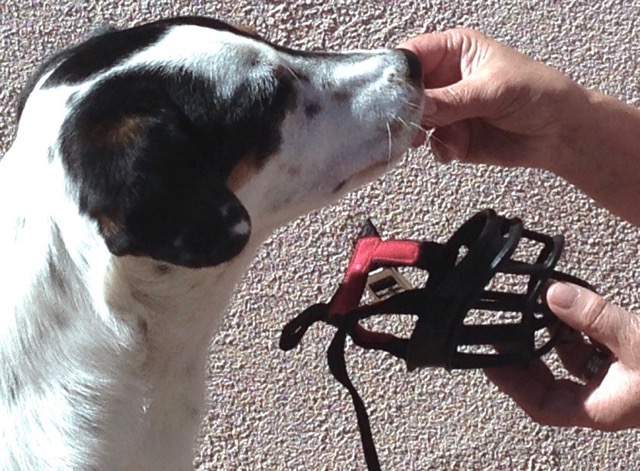
Now the good news is, that yes, indeed, dogs can learn to enjoy wearing a muzzle. Dogs can learn pretty much anything. I would argue that a dog should not wear a muzzle if the preliminary work that takes to teach him to be comfortable with the muzzle has not been done. What happens is that when most dogs are fitted with a muzzle without a preliminary well thought out plan that is also well executed we are de facto setting up the dog to have a bad association with wearing one and now the quality of life I was referring to has gone by the waste side.
Unfortunately, for the owners of dogs who have already bitten the stigma of having their muzzled dog in public constitutes an ongoing PR nightmare. My clients whose dogs have bitten someone and now wear muzzles in public tell me that at times strangers comment to them for being “responsible dog owners” (BRAVO! Stranger) while also, strangers are not shy in telling the owner that they “should” put to sleep such dangerous dogs! Without knowing anything about the dogs, its history, etc. How unfair this is.
Yes, ignorance about the ethology of dogs is really rampant. Add to the mix, the deep-seeded fear that humans have of animals that can potentially bite and you end up with a judgmental person that does very little to support the efforts of indeed responsible and educated dog guardians.
In my perfect world, we all see dogs for who they really are: A-MAZING! But also, potentially biting machines that can produce a bite with great force in a split of second. In my perfect world, dogs are taught before they even have a bite on their resume, that muzzles are fun and potentially having to wear one is no big deal, and it might indeed just be the ticket to continued play with other dogs, being walked in public, etc.
Also, in my perfect world, we stop judging people for muzzling their dogs because after all, they are the ones that love that dog, that know that dog and the ones that need our support and admiration instead of our sharp tongues.
Final note: The ONLY type of muzzle that a dog should wear is one that is fitted properly and that allows the dog to pant (literally open its mouth comfortably), take treats and even drink some water. Yes, maybe this will have to be modified by giving the dog water via a water bottle squirting some liquid out instead of the dog drinking out of a water bowl. Dogs can only regulate their body heat by panting and their paws, so if the dog cannot pant while being exercised- even when it is cool outside, it won’t be able to regulate its body temperature. You now have a potential emergency situation or worse, the dog dying of heat stroke. The muzzle to use is called (a) basket muzzle (pictured in this entry) and are not the ones that groomers and vets use often in their practice.