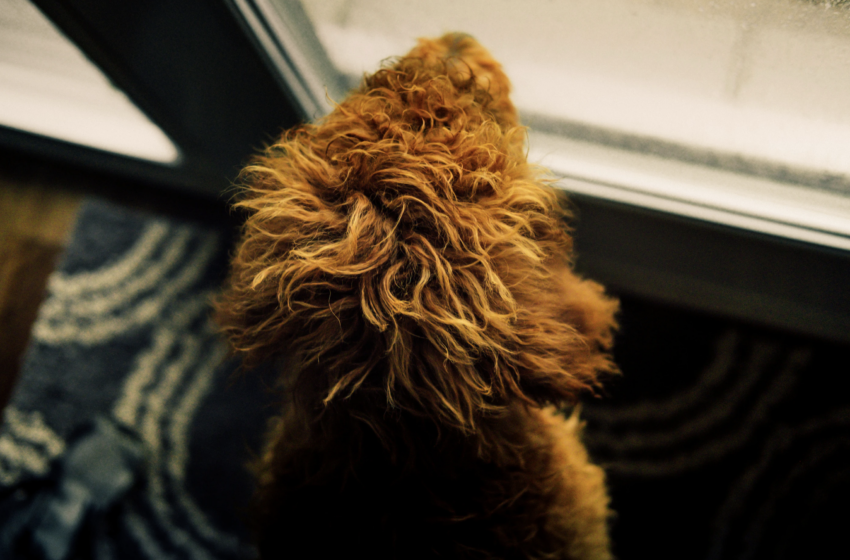
I am behind a closed door and I cannot attend to it at that moment. Deuce has followed me around and now he is lying on the other side of the door gently pawing at it and barking. I asked him to stop (the barking and pawing) and immediately after that I tell him what I want him to do instead.
The cosmos loves a void. And where there is a void something will come and fill it. When it comes to our dogs we need to make sure that we decide what should take place in the void left by the behavior (s) we don’t want. The dog is rushing at a visitor, who is at the door, then jumps effusively at your guest. Your face turns red in aggravation and even shame for your dog’s behavior.
So, what is it that we normally do instead of telling the dog what we would rather they do? Most likely we yell in frustration NO!!!! STOP THAT… confusion will reign. Your dog completely at odds as to what is a better option.
If instead we get into the habit of
1. Deciding what we want our pup to do in those sorts of circumstances (So we can stop immediately what we don’t like.)
2. Replace with what we want.
This is called a re-direct. Ideally our redirect also can serve as an antidote for the behavior we don’t want.
If I ask Deuce to lie down, I know from experience he will just relax and wait for me to get to the door to let him in or just walk away. In other instances, we need to use what is called a DRI which stands for differential reinforcement of incompatible behavior. In plain English, just reinforce for something else that will de facto prevent your dog in resuming in the unwanted behavior.
The typical example is asking a dog to sit instead of jumping on the guest. Or feeding the dog treats as the bell is being rung so that it cannot bark, since barking and eating treats are incompatible actions. The other fantastic bonus of using this sort of rational in training is that as whatever the environment reinforces (and yes, that includes us) will become the preferred behavior offered.
So why is it then that we insist in just stopping what we don’t like in a young child or in our pet instead of redirect for a successful outcome? Our own behavior can be motivated by several factors.
Perhaps we are exasperated because the behavior that we don’t want happens over and over again and now we are not even thinking of re-directing. Ignorance of this important rule of learning or multitasking? And so, the list goes on.
I would add where we put our attention, we put our energy. One strategy that works for me is to take something like a behavior re-direct and practice it until it becomes a natural response- even when busy, frustrated or just lack the time of focus to give my dogs clear instructions.
One thing though to keep in mind, that we can only re-direct the dog to do something that the dog has previously learned. And do keep in mind that sometimes folks think that because the dog responded once or just a few times to our insisting verbal cue does not mean that the dog has actually learned what we mean.
A dog might have learned a sit (put butt on ground) AND a stay (remain in that position until released) however, the stay part has more to do with the dog being able to sustain the behavior for a particular length of time and this is something that requires a lot of practice. It is hard for dogs to sustain duration without practicing. Your dog is not willful or a jerk because he breaks the sit (or else) ahead of you, it just means that he is under-trained.
My suggestion to you then, is to make a list of behaviors that your dog can do instead of “x” behavior and that you begin to ask just after you said NO to your dog for that well learned one. Be ready now, for your dog to respond in kind and for you to pay your pup, otherwise your dog will not begin to offer the behavior you want because it is not being reinforced.