
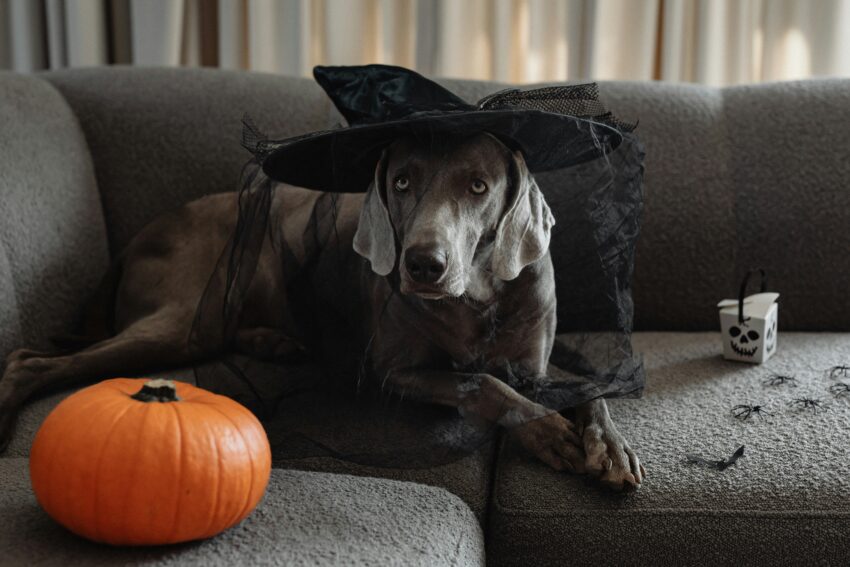
We all know how most kids feel about Halloween — and let’s be honest, many adults get just as excited. The mystery, the costumes, the sugar rush, the chill in the air… it’s a recipe for fun (and maybe a few goosebumps).
But what about our dogs?
Do they care for Halloween? Probably not for the candy — though they’d love a taste — but the sights, sounds, and energy of the night can certainly leave an impression. The trick is learning what kind of impression.
The Costume Conundrum
Let’s start with the classic question: Does your dog actually enjoy dressing up?
When you bring out that pumpkin sweater or bat-wing harness, what happens?
- Does your dog wag and bounce, ready to strut the streets like a canine superstar?
- Or does he freeze like a statue, eyes wide, as if to say, “Why are you doing this to me?”
A relaxed, tail-wagging pup in costume likely associates dressing up with something positive — your attention, laughter, praise, or the excitement of going out together. A stiff, hesitant dog? That’s a sign the costume might feel strange or uncomfortable. And no one wants Halloween to be scary for the wrong reasons.
The key is preparation. Introduce costumes gradually, pair them with treats and praise, and let your dog choose comfort over fashion. (Trust me — a happy dog is always the cutest one at the party.)
A Learning Opportunity in Disguise
Halloween can actually be a wonderful training opportunity. Dogs are always learning — constantly evaluating their environment and adapting. So why not make this spooky season a chance to reinforce good manners and confidence?
If your dog enjoys or is neutral around children, have him join the candy-giving fun. Let the kids toss him a treat for polite behaviors — sitting calmly, staying on his mat, or waiting patiently at the door. It’s a win-win: your pup practices self-control, and the kids get a real-life example of positive reinforcement at work.
And if you’ve been working on visitor manners — like not jumping or barking at the door — Halloween provides plenty of real-life practice reps. You can’t buy that kind of training setup!
Ghosts, Gravestones, and Giggles
Now, let’s talk about the neighborhood walk. Halloween decorations can look pretty wild from a dog’s perspective — floating ghosts, glowing pumpkins, fake graves, and all sorts of strange smells.
Watch your dog’s body language as you pass by:
- Does he approach curiously, tail wagging and nose twitching? Reward him!
- Does he hesitate or hang back? That’s okay too. Gently encourage him to explore on his own terms and reward every brave step forward.
This type of exploration builds confidence and teaches your dog that “weird and new” things aren’t scary — they’re opportunities to earn food and praise.
The Real Treat
The truth is, Halloween can be a training playground — full of sights, sounds, and social interactions you can use to your dog’s advantage. With the right mindset, you can turn what might otherwise be a stressful evening into a confidence-boosting, learning-filled adventure.
So this year, as the doorbells ring and little monsters roam the streets, take a moment to see the night through your dog’s eyes. Stay patient, keep the treats flowing, and turn all that spooky energy into something positive.
Because the best Halloween trick of all? Turning fright night into training night. 🐾